
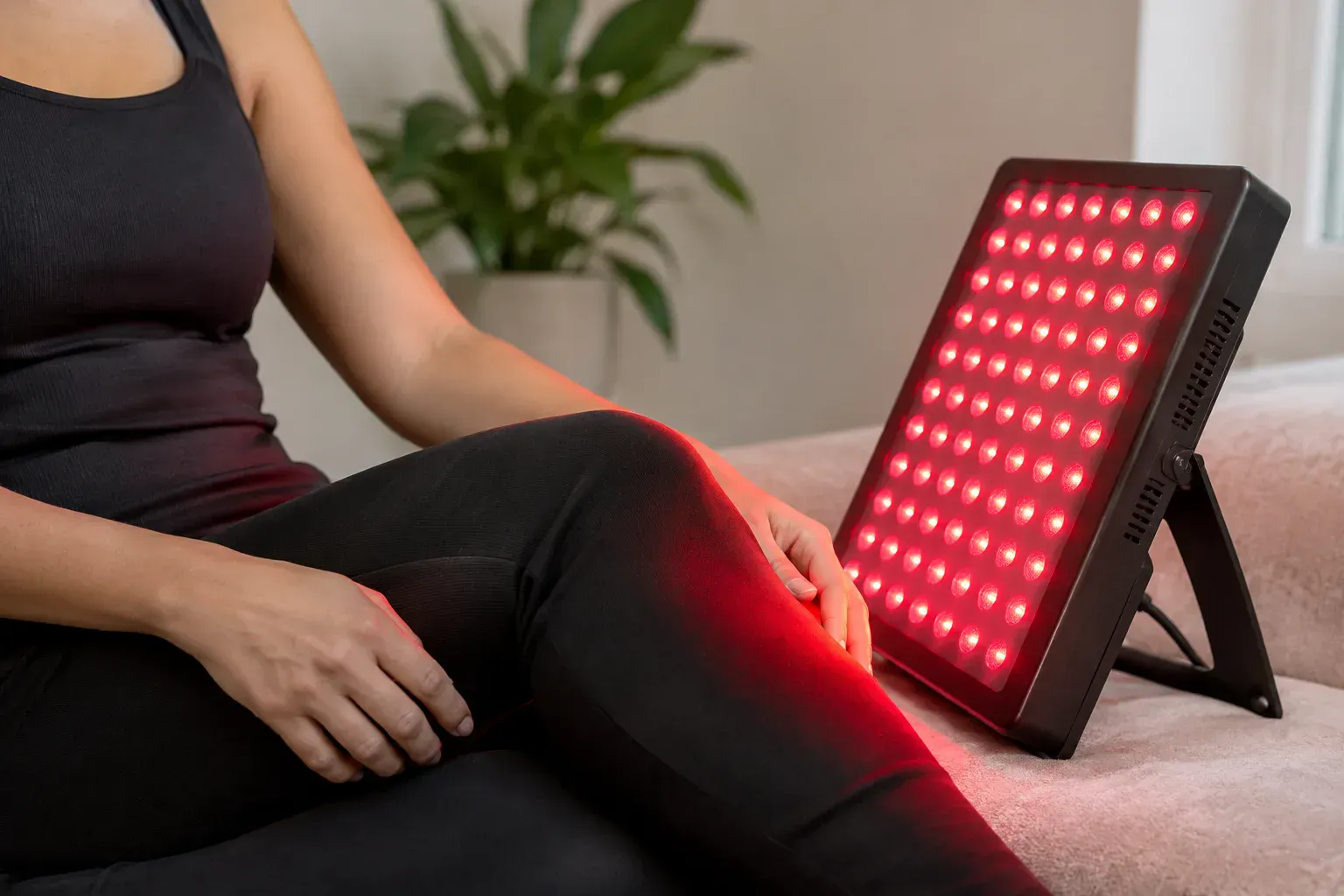
Does Red Light Therapy Work Through Clothes? Here’s the Truth
No, red light therapy does not work effectively through clothing. Fabric absorbs and scatters most of the red and near-infrared light before it reaches your skin, which sharply cuts the dose your cells actually receive. For the treatment to work the way it’s designed to, the treatment area needs direct, unobstructed exposure to the light.
That’s the short answer. But if you’ve ever sat through a session with your shirt still on and wondered whether you just wasted twenty minutes, it’s worth understanding why. Once you see what’s happening, you won’t make that mistake again.
How Does Red Light Therapy Work on Skin?
Red and near-infrared light is absorbed by mitochondria inside your cells, specifically by an enzyme called cytochrome c oxidase. Think of mitochondria as tiny engines that power the cell. When they absorb the right wavelengths, they produce more ATP, the energy molecule cells run on. That extra energy supports processes like collagen production, inflammation control, and tissue repair.
This process is called photobiomodulation, and it isn’t a recent wellness invention. In the 1990s, NASA-backed research explored LED light for growing plants in space, and that work led to studies on whether the same light could support wound healing. Since then, photobiomodulation has been studied in dermatology and physical therapy, and the technology has made its way into at-home masks and panels.
None of this happens if the light never reaches your skin. That’s the whole problem with keeping clothes on during a session.
Why Does Clothing Block Red Light Therapy?
Fabric works against light therapy in two ways, and both reduce the dose your skin receives.
Fabric Absorbs Light
The fibers in clothing soak up a portion of the light before it can pass through. Darker colors and thicker materials absorb the most.
Fabric Scatters Light
Whatever light does get through doesn’t come out the other side as a clean, direct beam. It bounces around inside the weave and spreads out, losing much of its strength along the way. Red light therapy depends on a concentrated dose landing directly on the treatment area, not a diffused, weakened version of it.
Does Near-Infrared Light Pass Through Fabric Better Than Red Light?
Somewhat. Near-infrared light (such as 850nm) has a longer wavelength than visible red light (such as 660nm), so it penetrates tissue more deeply and can pass through thin fabric a little more easily. But “a little more easily” still means a significant loss. A meaningful share of near-infrared light is still absorbed and scattered by clothing, so even dual-wavelength devices work best on bare skin.
How Different Fabrics Compare
The table below is a general guide based on fabric thickness, color, and weave. It is not a set of lab measurements.
| Fabric Type | Light Blocking Level | Practical Impact |
|---|---|---|
| Thin white cotton | Moderate | Still blocks a meaningful portion of light; not a reliable workaround |
| Thick cotton or denim | High | Blocks most of the light; very little treatment reaches skin |
| Synthetic blends (polyester, nylon) | High | Tight weaves scatter and absorb light heavily |
| Dark or black fabric | Very high | Dark dyes absorb light more aggressively |
| Specialty light-permeable fabric | Low to moderate | Better than regular fabric, but still reduces intensity compared to bare skin |
Even the best row in that table isn’t the same as no barrier at all. It’s a difference of degree, not a real solution.
Do “Light-Penetrating” Fabrics Actually Work?
Some brands sell clothing marketed as light-permeable, and it does perform better than an average t-shirt. But better than a bad option isn’t the same as good. These fabrics still reduce the intensity of light reaching your skin. They can be a reasonable backup if you need to stay covered for a specific reason, but they’re not a substitute for bare skin if consistent results are the goal.
Do You Need to Remove All Your Clothes for Red Light Therapy?
No, only the area being treated needs to be bare. Facial LED masks are designed to sit directly against the skin, so this usually isn’t an issue with them. The more common mistake happens with larger red light therapy panels used on the back, shoulders, or chest, where it’s easy to leave a shirt on out of habit. The rule is simple: whatever area is positioned in front of the light should be bare skin during that session.
What Should Be Bare and What Should Stay Covered
| Body Area or Situation | Should It Be Bare? | Why |
|---|---|---|
| Face during LED mask use | Yes | Masks are designed for direct skin contact |
| Back, shoulders, or chest under a panel | Yes | Clothing absorbs and scatters the light |
| Eyes during any session | No, keep them protected | Bright light can be uncomfortable or unsafe for eyes |
| Area with a fresh bandage or dressing | Follow your provider’s guidance | Dressings block light much like clothing does |
| Hair covering part of the face | Push it back | Hair blocks light the same way fabric does |
Why Bare Skin Matters for Your Results
Many people do everything else right. They buy a quality device, stick to a regular schedule, and stay patient through the eight to twelve weeks it usually takes to notice real change. Then they quietly undercut all of it by leaving fabric in the way every session. It’s one of the easiest fixes in any light therapy routine.
This matters especially for the face. Facial skin is thinner and tends to show changes more visibly with consistent, direct exposure. That’s why fit matters as much as the wavelength specs on the box. A mask that sits loosely leaves gaps between the LEDs and your skin, so it can’t deliver what its spec sheet promises. When comparing options, look for LED face masks that contour closely to the face rather than hovering over it.
How to Get the Best Results From Red Light Therapy
Start With Clean, Dry Skin
Remove clothing from the treatment area, and wash off makeup and heavy skincare products first. Mineral sunscreens containing zinc oxide or titanium dioxide are designed to reflect light, so they can block part of your session too.
Keep the Light Source at the Right Distance
Masks should sit close to the skin. For panels, follow the manufacturer’s recommended distance, since moving too far away lowers the dose your skin receives.
Protect Your Eyes
Your eyes are the one area that should stay covered. Use the goggles or eye protection that came with your device, and avoid looking directly into bright LEDs.
Stay Consistent
Results build gradually over several weeks of regular use, not after a single session. That’s true no matter how perfectly you use your device.
The Bottom Line
Red light therapy was never designed to work through fabric, and no “breathable” or specially engineered material fully changes that. The mechanism depends on light reaching your skin cells directly, and any barrier in between reduces how much benefit a session delivers. If you’re already putting in the time, the fix is simple: keep the treatment area bare, protect your eyes, and let the light reach your skin the way it’s meant to.
One thought on “Does Red Light Therapy Work Through Clothes? Here’s the Truth”