

Choosing a lie down device
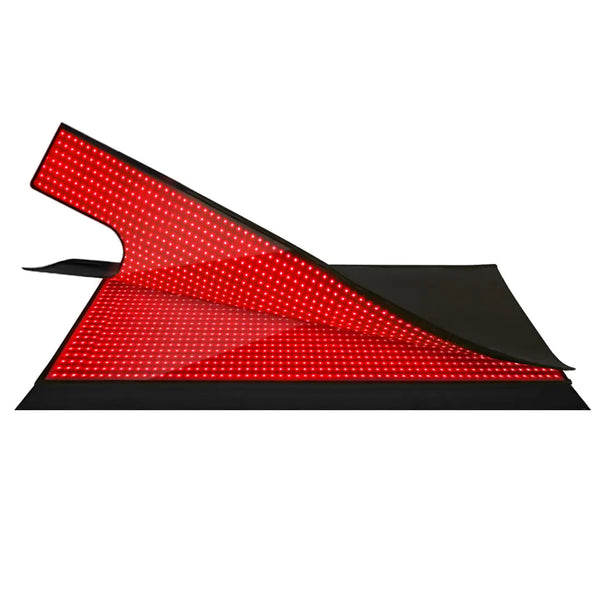
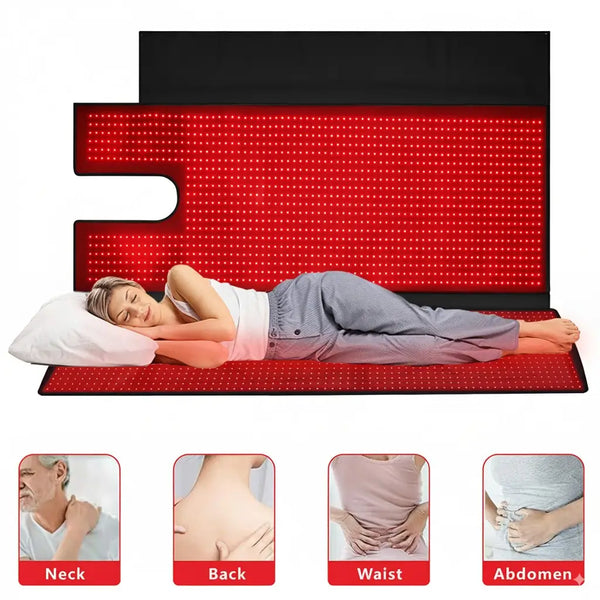
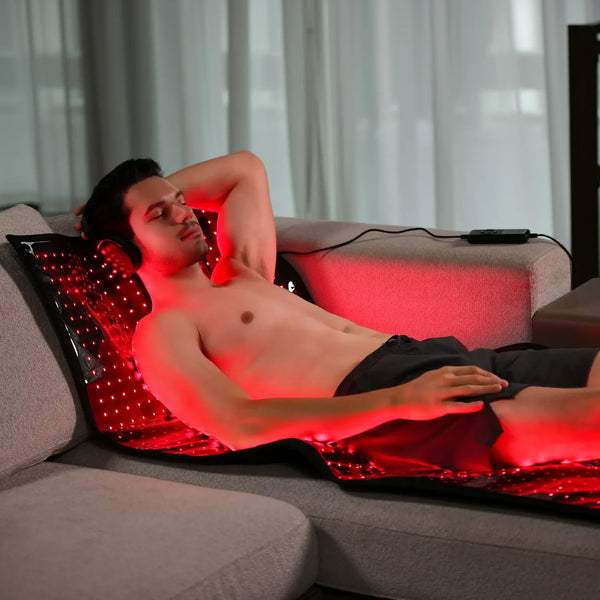
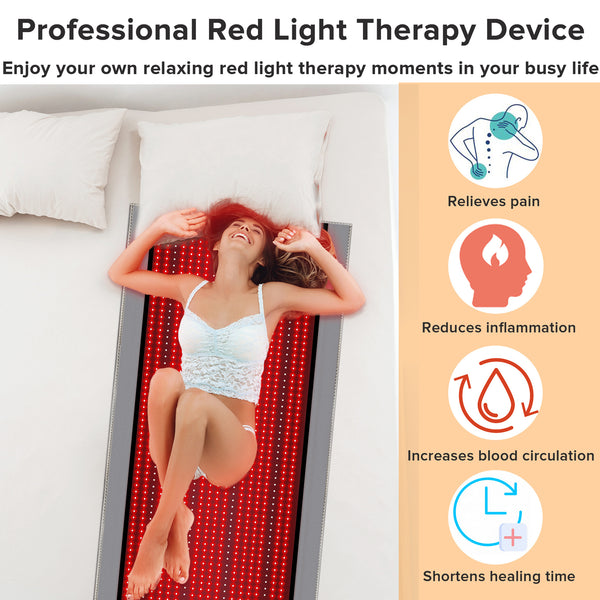
Everything in this collection treats you while you are lying flat. That single fact is what separates this category from panels, and it decides who should buy from here. A panel asks you to stand still in front of it. A mat asks you to lie down, which most people find easier to do for twenty minutes at the end of a day.
There are three devices here and they are genuinely different from one another, so the choice is not about which is best.
Mat, mattress or sleep bag
| Therapy mat | Mattress | Sleep bag | |
|---|---|---|---|
| Coverage | The side facing down | The side facing down | Wraps front and back at once |
| Adds heat | No | Yes, infrared heat | No |
| Rolls away | Yes | Awkward, it is a mattress | Yes |
| Best for | Back, hips, hamstrings | Long sessions, warmth | Whole body in one go |
The honest summary is this. If your problem is your back, buy the mat, because it is the cheapest of the three and it treats exactly the surface you lie on. The mattress earns its price only if you want heat as well as light, and heat is a comfort feature rather than the light working. The sleep bag is the only device here that reaches your front and back in the same session, which is a real difference and the reason it costs the most.
One side at a time
This is the point people miss until the device arrives. A mat and a mattress light the side of you that is touching it. Your front gets nothing. If you want both sides you run two sessions and turn over in between, which doubles your time.
Only the sleep bag avoids that, because it closes around you. If treating both sides matters to you, that is the one to buy, and paying more for it is rational. If you are treating a specific area like your lower back, it is unnecessary.
LED count and what it actually tells you
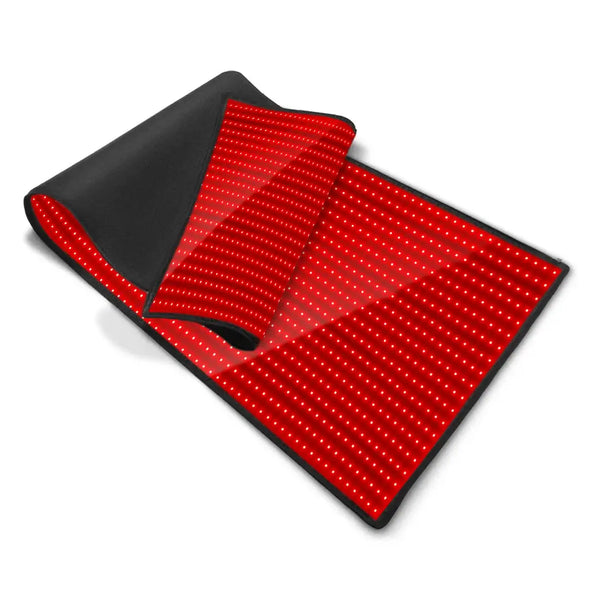
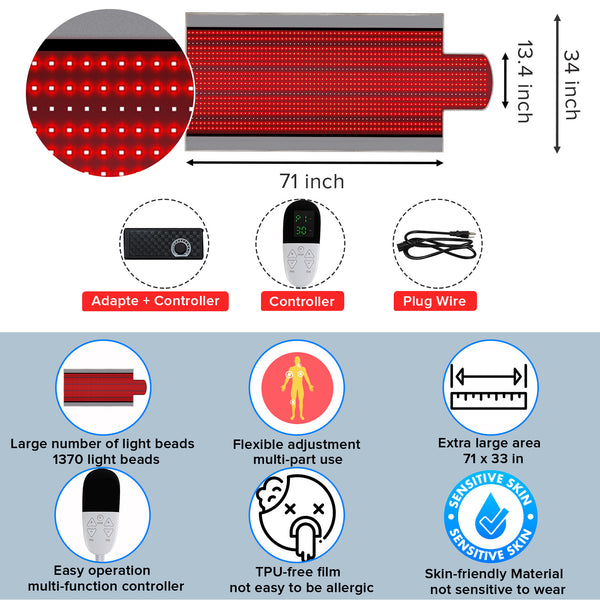
These devices carry very high LED counts compared to anything else we sell, and the number is easy to misread. A high count here reflects the surface area being covered, not intensity per square inch. Spreading diodes across a body length surface needs far more of them than a panel does.
Do not compare an LED count here against a panel's LED count and conclude the mat is stronger. They are covering different amounts of you. What LED count does tell you within this category is how evenly the surface is lit, which is worth checking, because gaps mean parts of your back get less than others.
Wavelengths
These run 650nm red with 850nm near-infrared. Red is absorbed close to the surface and near-infrared travels further into tissue. For anything you are lying on a mat to reach, muscle and joints rather than skin, the near-infrared component is doing most of the work, which is why every device here includes it rather than running red alone.
Space, and the part nobody plans for
A body length mat needs body length floor space, clear, every session. That sounds obvious and it is still the most common regret in this category. Measure the room, then think honestly about whether you will move a coffee table four times a week. If the answer is no, a wrap you can use on the sofa will get used more often, and a device that gets used beats a better one that does not.
Storage is the same question in reverse. Mats and sleep bags roll up. A mattress does not, so it needs somewhere to live permanently.
When to buy something else instead
If you are treating one knee, one shoulder or one section of back, none of these is the right purchase. A wrap costs a fraction as much, sits in direct contact with the area, and delivers more light to that spot than a full body mat does to any single part of you. The cordless belts and wraps cover that case properly.
And if you would rather stand than lie down, or you want to treat your front and back without buying a sleep bag, a standing panel does that in one session. Browse the standing panel range instead.
Related collections
For joint and back discomfort generally, the pain and joint relief devices cover every shape we stock. If you are using one of these as an evening wind down rather than for recovery, the sleep and relaxation range approaches the same devices from that angle. Athletes treating large muscle groups after training will find the recovery devices a closer match.
These products are intended for general wellness purposes only. They are not intended to diagnose, treat, cure or prevent any disease or medical condition.