

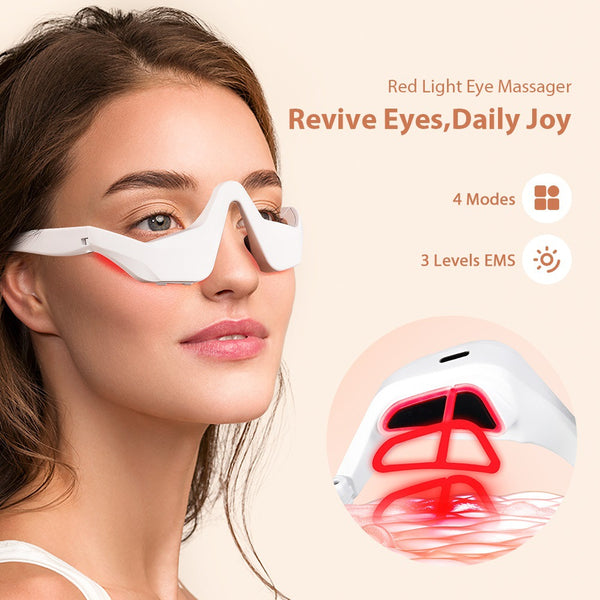
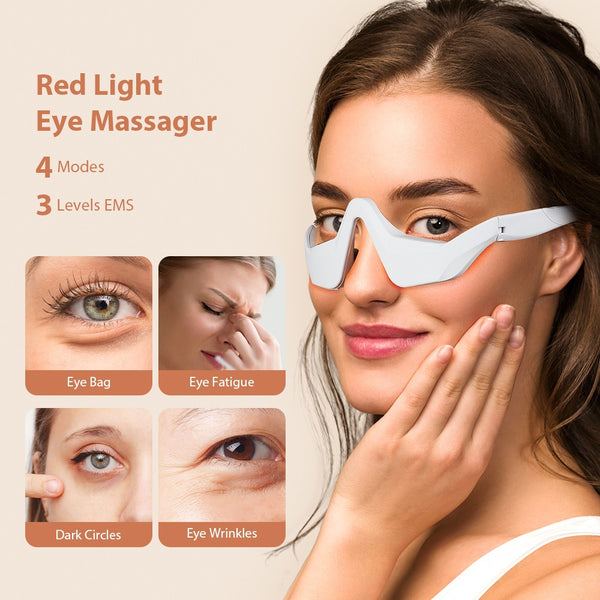
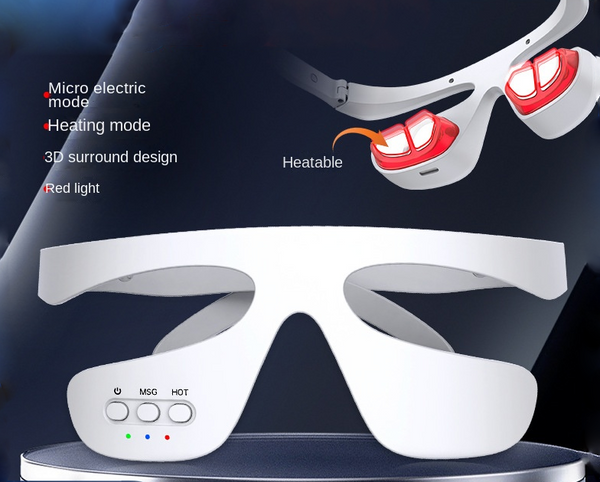
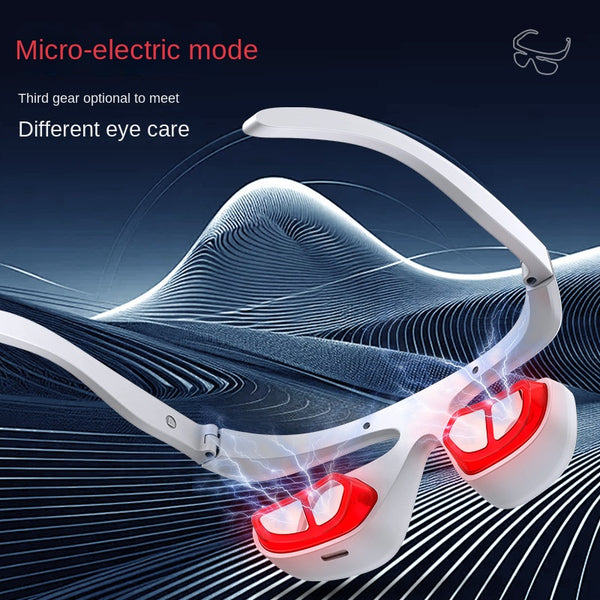
What these devices do and how they differ
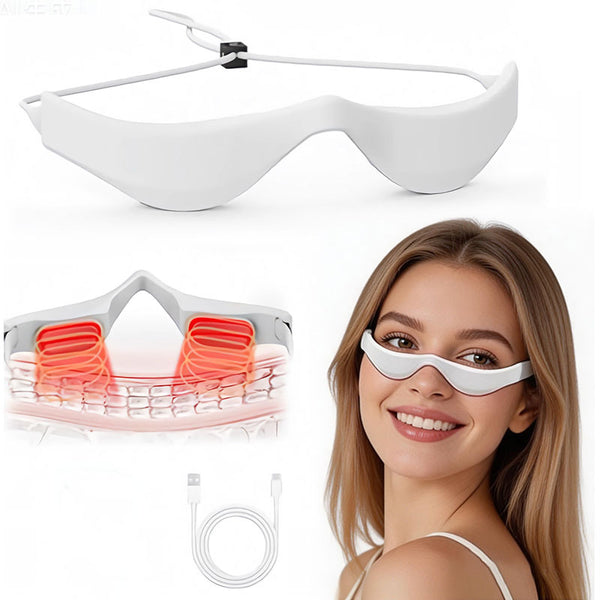
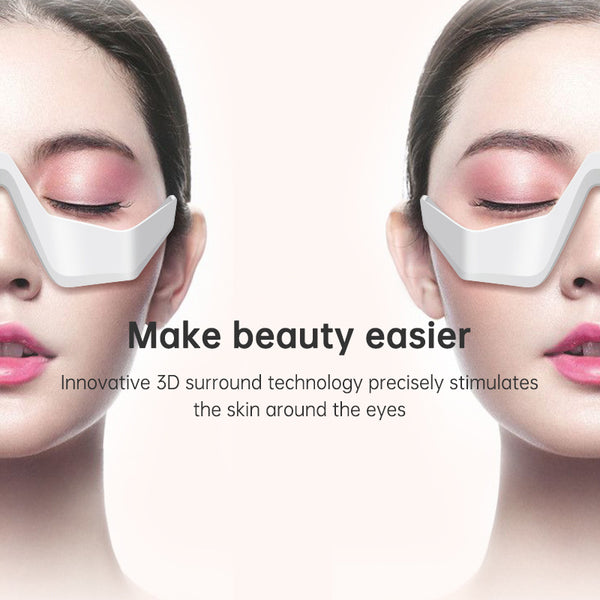
Every device here works the orbital bone area, the ring of skin around the eye socket, rather than the eye. They differ in which mechanisms they bundle and how they sit against the face.
| Mechanism | What it is | What it is for |
|---|---|---|
| Red light | LEDs at roughly 630nm to 660nm | Skin texture and tone, the slow cumulative part |
| EMS microcurrent | Low level electrical pulses | Immediate tightening sensation, temporary |
| Warmth | A gentle heating element | Comfort, and it feels good on tired eyes |
| Vibration | Small motor, tapping motion | Massage sensation around the socket |
Separating what is instant from what is slow
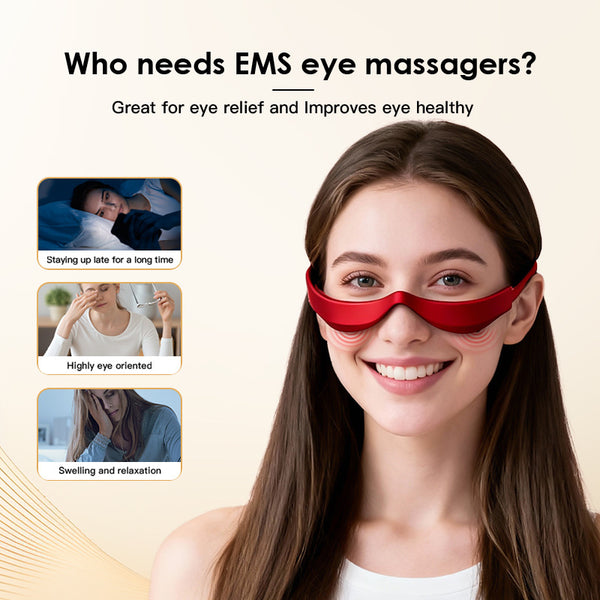
This matters more here than in any other category, because the two get sold as one thing. Microcurrent, warmth and vibration produce something you feel during and immediately after the session. Puffiness looks reduced, skin feels tighter, and eyes feel less tired. Those effects are real and they fade within hours.
The red light component is the slow one. It works cumulatively over months or not at all, and you will not feel it happening. If you buy a device expecting the immediate feeling to become permanent, you will conclude it stopped working. It did not, you were feeling two different things.
Wand or wraparound
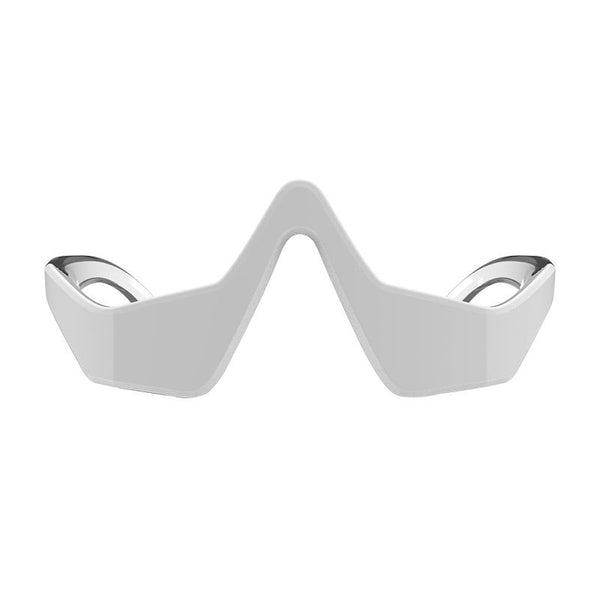
Compact wand style devices are held and moved along the under eye area, giving you control over exactly where and how much pressure. Wraparound units sit over both eyes like a sleep mask and run hands free, which suits people who want to lie back for ten minutes.
Wands are cheaper and more precise. Wraparounds are more relaxing and more likely to be used at the end of a long day. Neither is technically superior, so choose by which one fits the evening you actually have.
The safety point that is not negotiable
Do not use these with your eyes open, and do not point any light device into an open eye. Devices designed for this area account for it, either by keeping LEDs off the eyelid line or by being used with eyes closed. That is not a formality. The retina has no pain response to warn you and there is nothing to gain from testing it.
Anyone with glaucoma, recent eye surgery, a retinal condition or an implant near the eye area should ask their ophthalmologist before using one at all.
Where a cheaper device is fine
This is one category where the inexpensive options are genuinely reasonable. The treatment area is small, the session is short, and the mechanisms are simple. A basic microcurrent and red light wand covers the same ground as a device costing several times more. Spend the difference on a face device that covers a larger area instead.
Session length and pressure
Sessions here are short, usually five to ten minutes, and there is no benefit to running longer. Pressure is the thing to watch with wand style devices. The skin around the eye is thin and bruises easily, so the device should glide rather than drag, and a thin layer of gel underneath makes that easier. If you finish a session with red marks, you are pressing far too hard.
Related collections
Under eye lines are part of the wider ageing picture, and the anti-aging light therapy tools cover the rest of the face. Several masks in the whole face light therapy masks range already include the eye area, which may make a separate device unnecessary. If tired eyes are an evening problem, the red light for the hours before bed section is worth a look. For breakouts alongside eye care, see light therapy for breakout prone skin.
These products are intended for general wellness purposes only. They are not intended to diagnose, treat, cure or prevent any disease or medical condition.