

What survives a suitcase
A travel device has one job, which is to still be used when you are away from home. That makes weight, charging and durability the real specifications, and total output a secondary concern. A weaker device you actually run beats a stronger one left at home, and the arithmetic on that is not close.
Formats and what each is good for
| Format | Packs like | Best for |
|---|---|---|
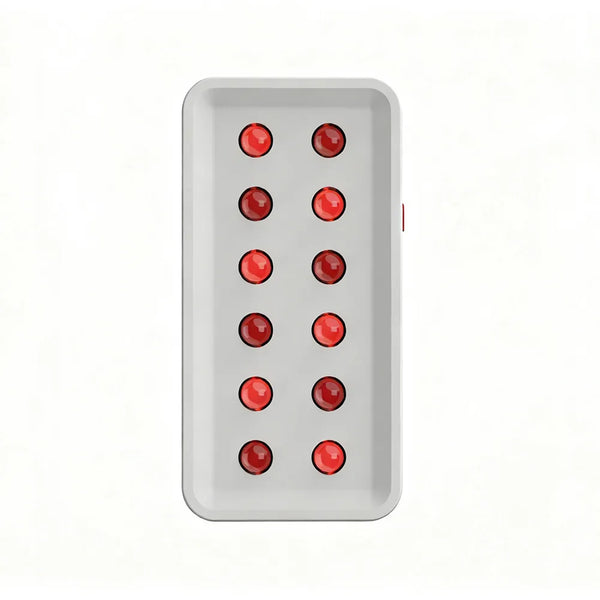
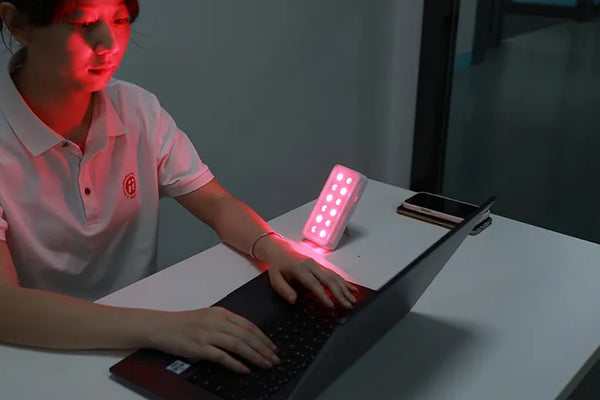
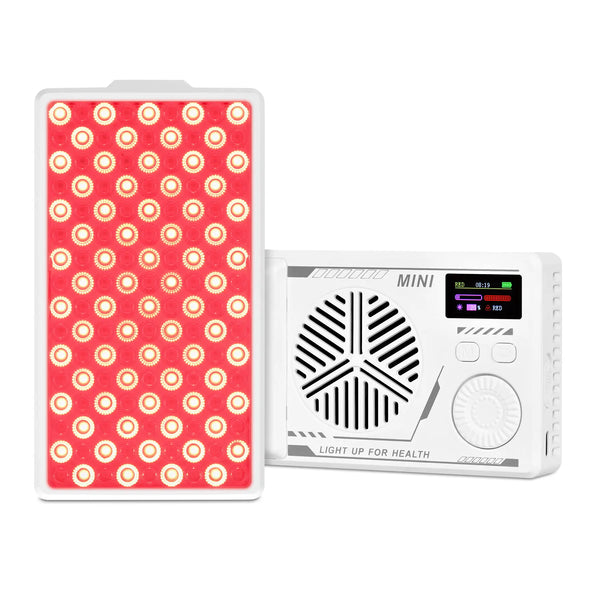
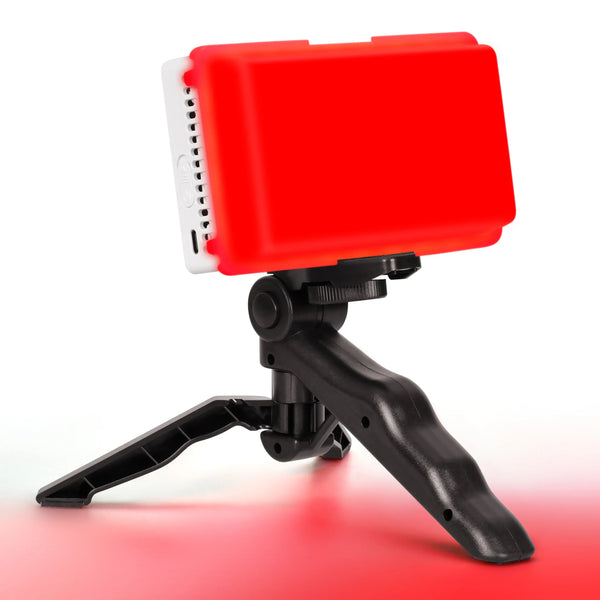
| Mini panel | A thick tablet | Face, shoulder or knee sessions in a hotel room |
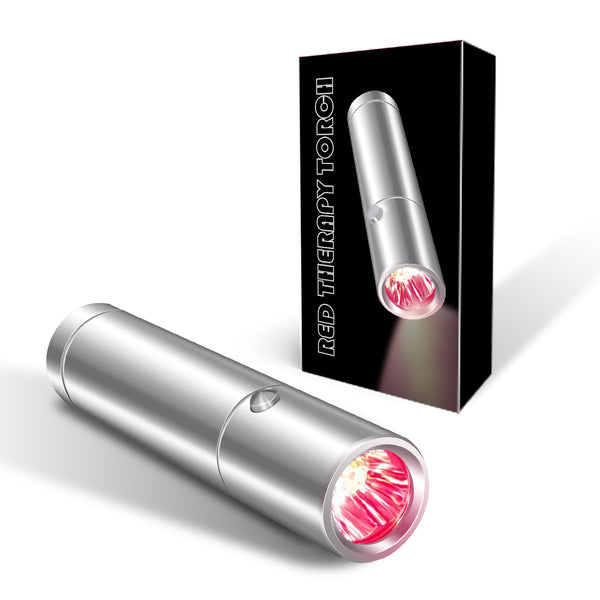
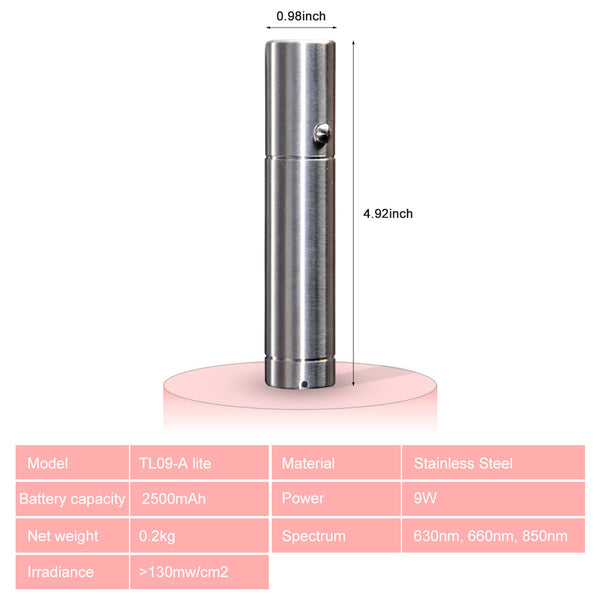
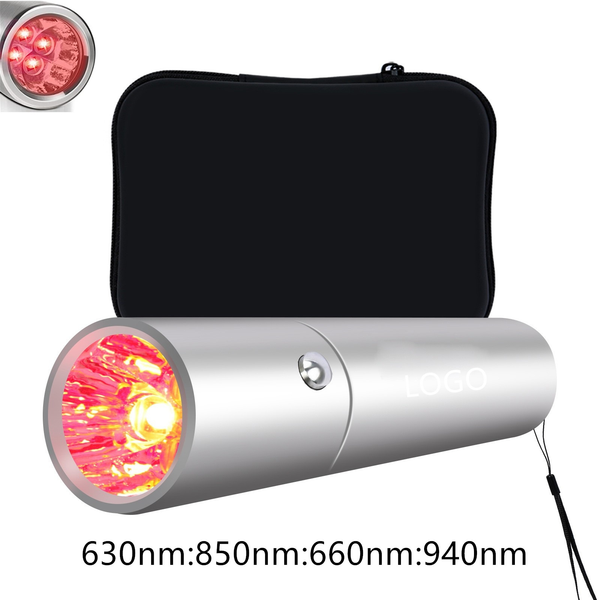
| Torch | A large flashlight | Spot work, sturdy enough for a bag with no case |
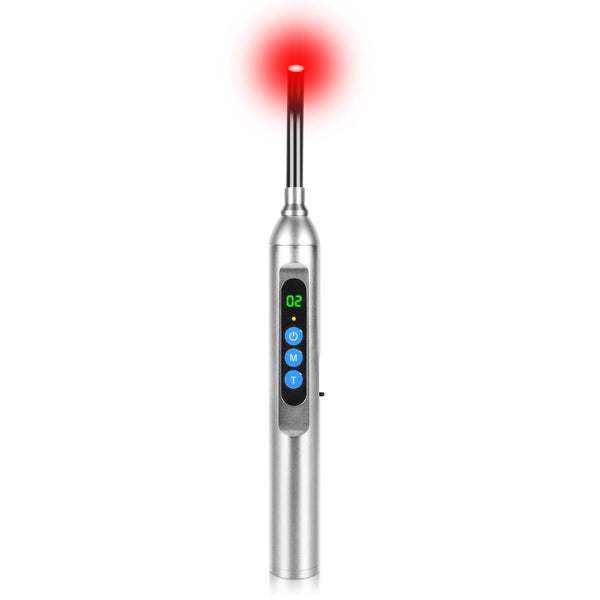
| Pen | A marker | Very small areas, fits a pocket or wash bag |
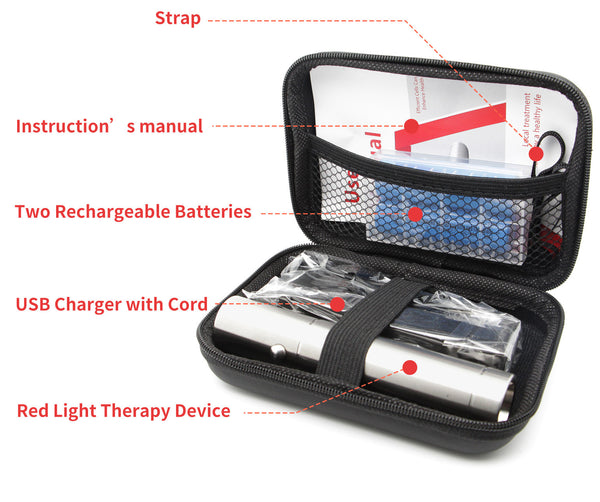
| Flashlight with heads | A flashlight plus attachments | Several uses from one item, fewer things to pack |
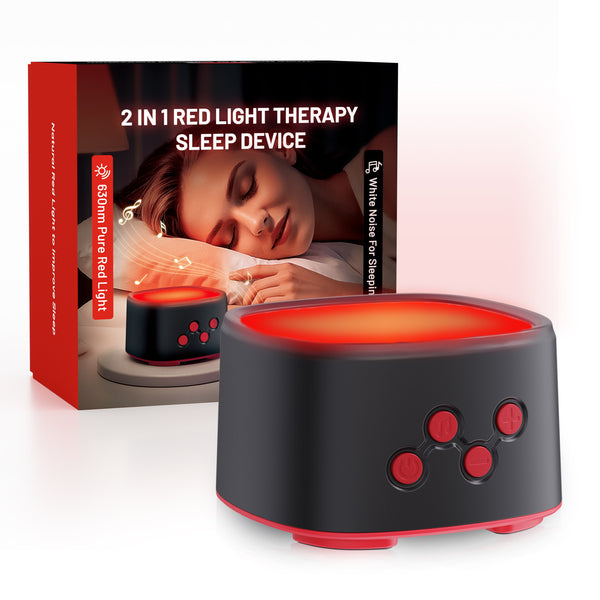
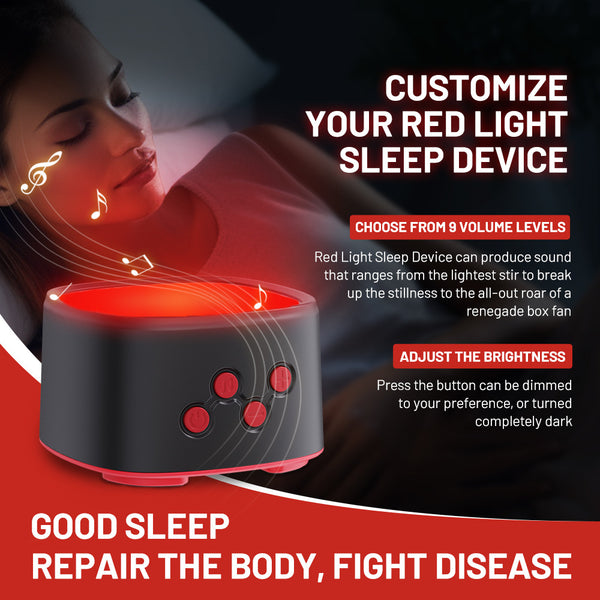
| Sleep device | A small bedside unit | Evening routine and unfamiliar rooms |
Charging is the specification that decides it
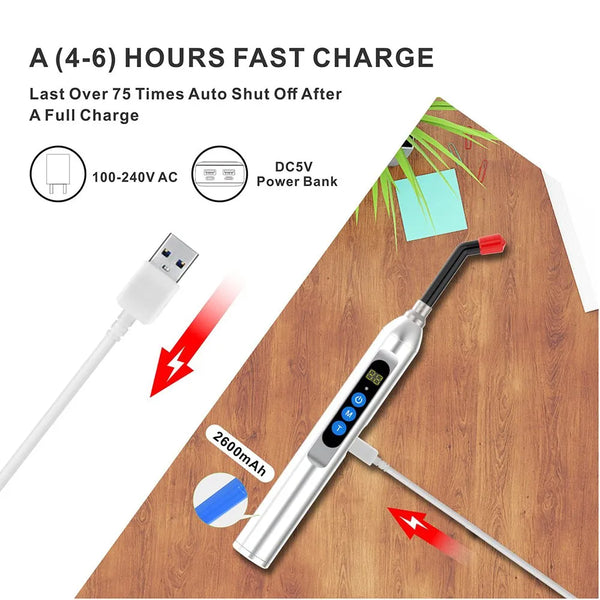
Check what the device charges from before anything else. USB C is the format to want, because it shares a cable with your phone and laptop and you carry one fewer charger. Anything with a proprietary barrel plug means a dedicated adapter, and a dedicated adapter is the thing people leave in a drawer at home.
Battery capacity matters more on the road than it does at home, since you may not be able to charge daily. A unit that runs three or four sessions between charges covers a long weekend without thought.
Aluminium against plastic
Torch style devices come in both. Aluminium bodies handle being thrown into a bag and dissipate heat better during longer sessions, which lets some of them run harder. Plastic weighs less and costs less. If the device lives in hand luggage most weeks, the metal body earns its extra weight. If it is going in a wash bag twice a year, it does not.
Flying with one
Lithium batteries generally travel in cabin baggage rather than in the hold, and airlines set their own limits, so check your carrier before you pack. Keeping the device in carry on is the safe default for another reason too, which is that these are not items you want going through baggage handling.
Where portable is the wrong choice
If the device will live on a shelf at home and never leave the house, buy the mains powered version instead. Portability costs you output, adds a battery that eventually degrades, and gains you nothing if it never travels. Buy portable because you travel, not because portable sounds better.
Full sized alternatives are in full sized panels for home use, and anything large enough to stand in front of will want something from the floor stands and mounting parts range too.
What fails first
On travel devices the battery goes before anything else. Lithium cells lose capacity over hundreds of charge cycles, so a device you use daily will hold noticeably less charge after two or three years. Nothing here has a user replaceable cell, which is worth knowing before you treat one as a permanent purchase.
The second thing to go is the switch, usually on cheaper plastic units that get pressed with wet or oily hands. If you want one device to last, the metal bodied torches are built better in this specific respect, and the difference shows up around year two rather than in the first month.
One device or two
Plenty of people end up with a mains powered unit at home and something small in a bag, which is a reasonable setup and not a duplication. The home device does the real sessions and the travel one keeps the streak going. If you are choosing between them and can only buy one now, buy the home device first unless you are away more than a week a month.
Related collections
Most of these devices also appear among the handheld units for precise work, grouped there by treatment area rather than by portability. For something you wear rather than hold, see the cordless wraps for the body. Travel skincare routines are covered by the LED masks for skin routines, several of which fold flat.
These products are intended for general wellness purposes only. They are not intended to diagnose, treat, cure or prevent any disease or medical condition.