

How to choose a red light therapy panel
Every panel here pairs 660nm red with 850nm near-infrared. What separates these models is coverage area, output, chip type and control, not the wavelengths, which are constant across the range.
Panel size and coverage
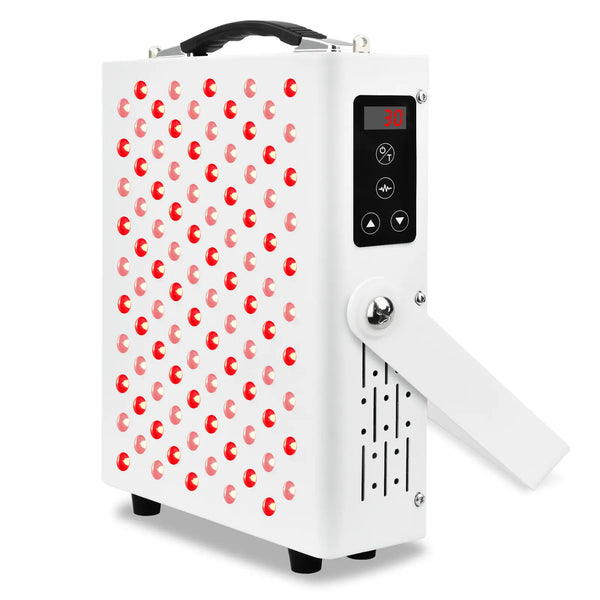
| LED count | Coverage | Best for |
|---|---|---|
| 60 LEDs | Single area | Face, knee, shoulder |
| 150 LEDs | Small zone | Lower back, calves |
| 300 LEDs | Torso | Back, chest, thighs |
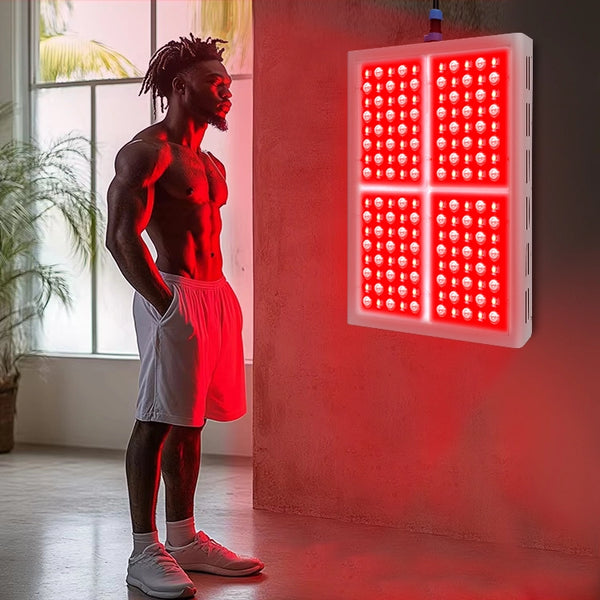
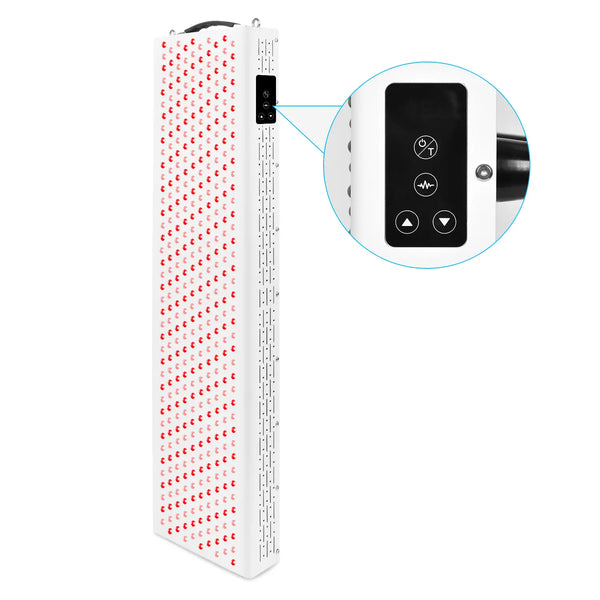
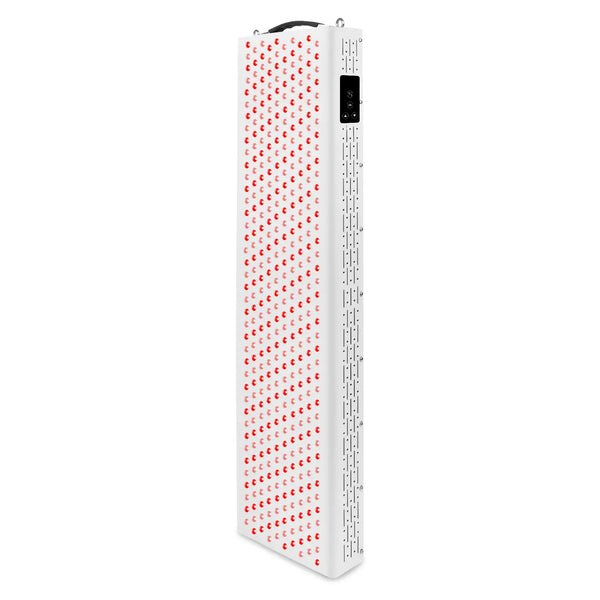
| 600 LEDs | Half body | Standing sessions |
| 1200 LEDs | Full body | No repositioning |
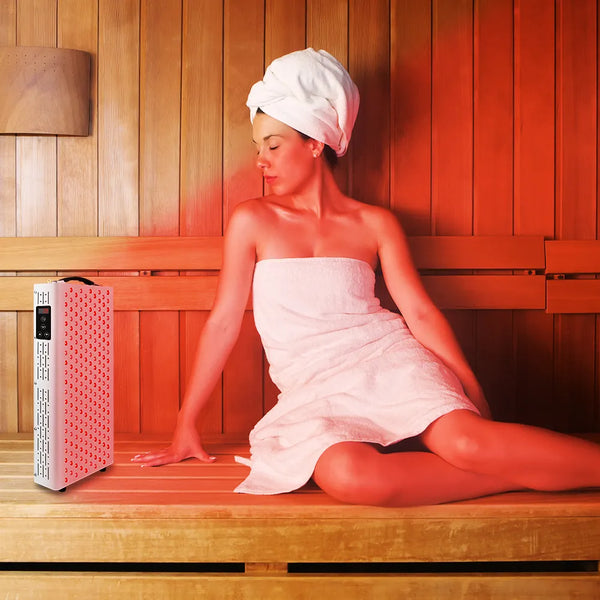
Larger panels cover more ground per session but need floor space and a permanent spot. Smaller panels cost less and store easily, so you will just reposition them mid session.
Single chip against dual chip
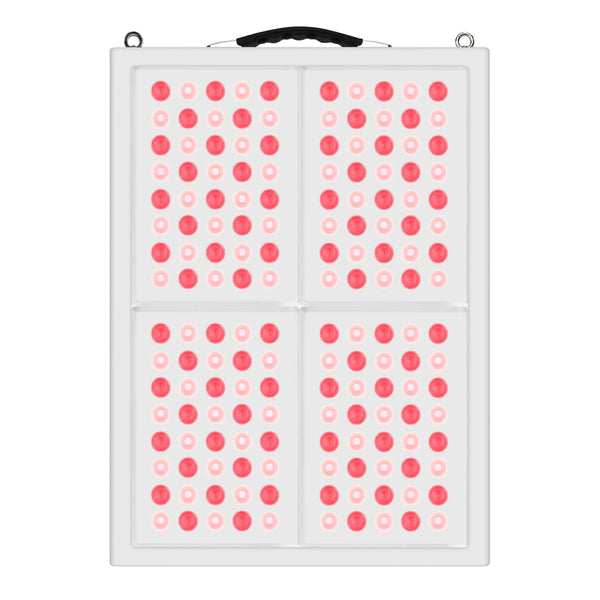
A single chip LED emits one wavelength per diode, so the array alternates between red and near-infrared emitters. A dual chip LED packs both into every diode, so each position on the panel delivers both wavelengths.
Across the PRO range the dual chip version costs only slightly more than the equivalent single chip panel, a small percentage rather than a different price bracket. At that gap, dual chip is the easier recommendation for most buyers, because you get both wavelengths at every point on the panel rather than alternating between them. If the budget is tight, single chip is not a compromise worth agonising over, since both run the same wavelengths at the same total output.
Wavelength count and controls
| Series | Wavelengths | Control |
|---|---|---|
| PRO single chip | 5 | LCD timer |
| PRO dual chip | 5 | LCD timer |
| PRO app control | 7 | App and LCD |
| FS8 Ultra Slim | 8 | LCD timer |
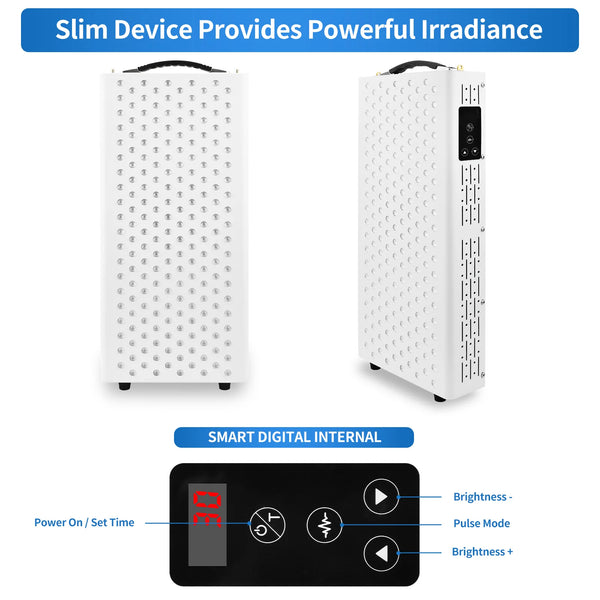
| Pulse S and X series | Pulsed output | LCD timer |
App controlled models carry a premium over the equivalent manual unit, and it is worth asking whether you will use it. The only settings that matter on a panel are time and intensity, and a physical button handles both faster than unlocking a phone and waiting for it to pair.
More wavelengths widen the spectrum but split total output across it. A focused dual wavelength panel and an eight wavelength panel at the same wattage are different tools, not better and worse versions of one thing.
Pulsed against continuous output
Continuous wave panels emit steadily. Pulsed panels cycle output at set frequencies. Our Pulse range covers the widest spread of any series we carry, from compact S series units through to the full body X7000. Pulsing lets a panel run higher peak output without the same heat build up, which is the solid practical argument for it. Whether the pulsing itself adds a benefit beyond that is still unsettled, so treat it as a feature rather than a reason to stretch your budget.
Stands and mounting
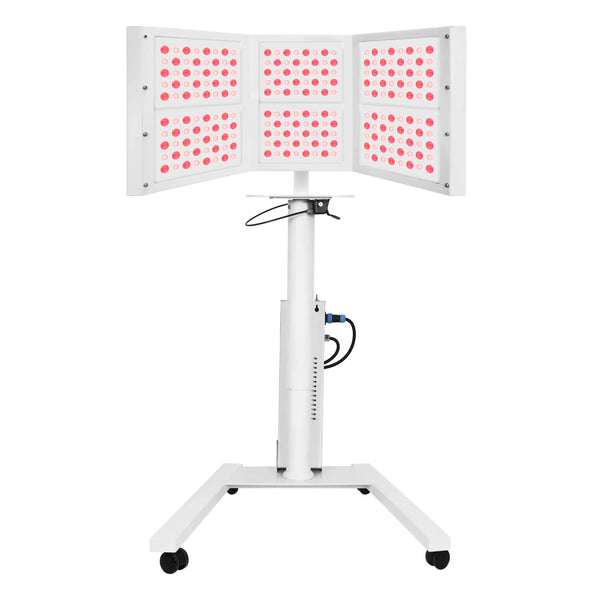
Larger panels need support. We stock three options: a fixed base, a simple floor stand, and a height adjustable electric stand. Browse the full panel stands and accessories range.
Related collections
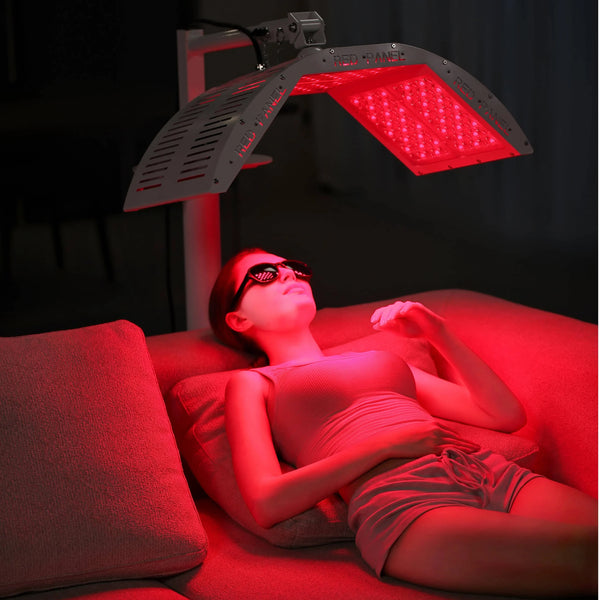
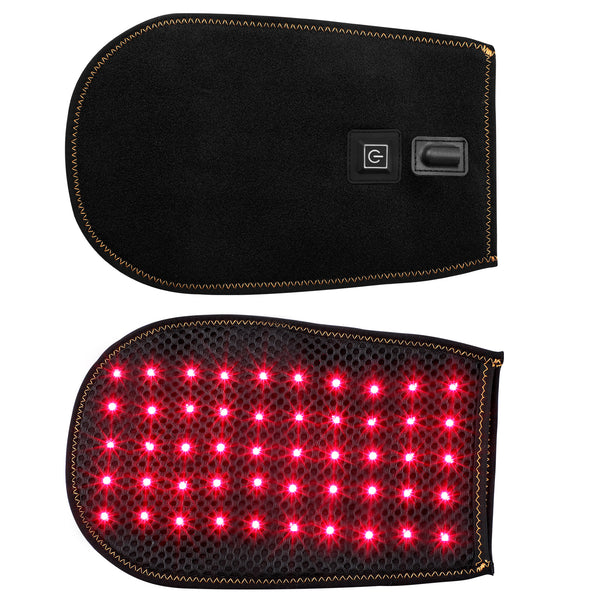
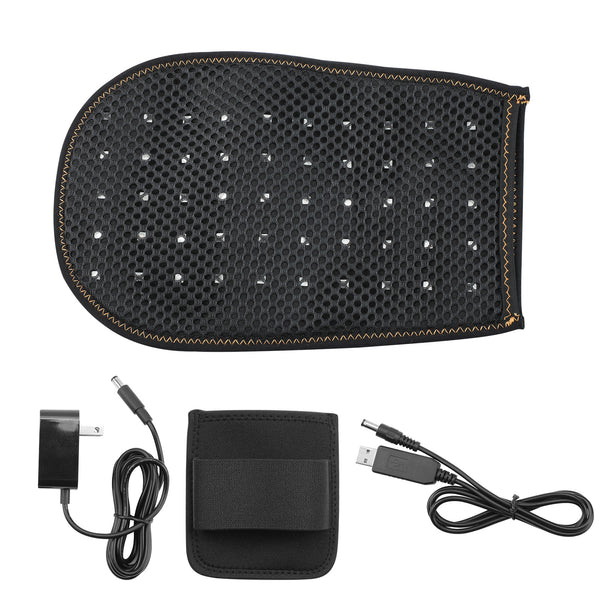
For a lie down alternative to a standing panel, browse our full-body red light therapy mats and sleep systems. If you are shopping specifically for joints and muscle recovery, the pain and joint relief range narrows the catalogue down to targeted devices. For something small enough to hold against one spot, see the handheld and targeted devices.
These products are intended for general wellness purposes only. They are not intended to diagnose, treat, cure or prevent any disease or medical condition.